
How to Give a Wedding Toast
Somebody asked you to give a toast, and it is time to actually write it. If you are like most people, you are a bit nervous, and for good reason.
You have never done this. There is no second take. There is a sizable crowd of guests coming, and they are going to stare at you for three minutes. Part of what causes your nervous feeling is the fact that the toast itself does not exist yet. There is nothing written down, so all you can picture is the moment itself.
Writing it is its own problem. You have years with your bride or groom and only three minutes to speak, so every draft lands in one of two places. It either leaves out the thing you actually wanted to say, or it tries to fit the whole friendship in and stops sounding like you.
The good news is that great toasts usually follow a simple four-piece framework: name the quality, tell the story, address the other, and finish with the future. That framework is below.
Your nerves will improve once you write the toast and practice it. We are here to help you do both with a few tips along the way. And even if you are comfortable with public speaking, a small bit of preparation goes a long way toward making sure you deliver a toast you will be proud of for years to come.
How to write the toast
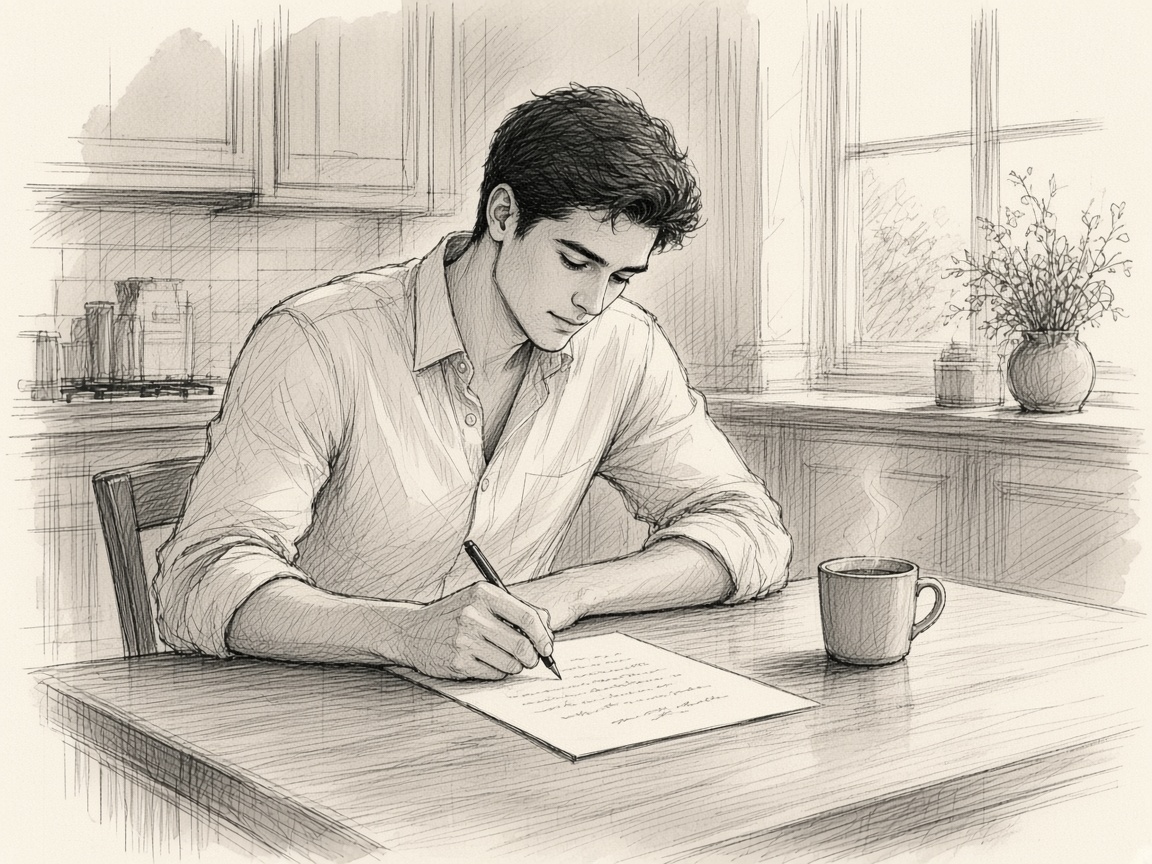
Step One: Name the Quality. What do you love about the bride? What do you find most admirable about the groom? Write down five of his or her qualities. Keep it plain and do not dress it up. She shows up. He is impossible to embarrass. She tells the truth even when it stings.
Once you have your five, pick the one quality even a stranger notices in the bride or groom. If two of them work, pick the one that matters most to you. You will open your toast by telling the guests your favorite quality about the bride or groom.
If you only learn one thing about Sarah tonight, it should be this: she shows up. Not when it is convenient. Every time.
Step Two: Tell the Story. Every toast says, "She is the kindest person I know." Great toasts tell the story that illustrates her kindness in action. Brainstorm a few stories from your own time with her. If you are drawing a blank, scroll through photos or pick up the phone to talk about your favorite memories.
Pick one story, not a whole year, and keep the details you actually remember: where you were, what he or she did, and the moment you noticed how kind, brave, or loyal they truly were.
Junior year, my car died outside Waco at eleven at night. I called Sarah to complain, not to ask for help. Ninety minutes later she pulled up in pajama pants with two coffees and a phone charger. She had an exam at eight the next morning, and she waited with me until almost two anyway.
Step Three: Address the Other. Your toast is about the bride or the groom, but it happens at a wedding, and a wedding is about two people. Include why you are glad they found each other. It could be what the other one brings out in yours. It can be one sentence. It can be the shortest part of the toast. But it needs to be there, and it should be about the other person, not about how happy you are for the couple in general.
When Sarah met Josh, I watched to see if he would show up for her the same way. And he did. When her grandmother was in the hospital, Josh drove her there and sat in the waiting room all night. Sarah has always taken care of everyone else. Now someone takes care of her.
Step Four: Finish with the Future. End on the future, not the past. Say what you are looking forward to for them: the trip they have been talking about, the house they want, the kind of parents they will be, or the business they keep saying they should start. Something real and specific beats something sweeping. Finish it with, "Let's all raise a glass to..."
A toast that ends in the past is a toast that feels over. A toast that ends looking forward leaves the room warm and hands them back to their evening.
I cannot wait to see the house with the porch, the dog you have already named, and someday a family built by two people who always show up.
Please raise a glass with me. To Sarah and Josh.
Left Unsaid. A few things are worth leaving out, because they come up at almost every wedding:
- Any previous relationship, for either of them.
- Anything their grandparents should not hear.
- An announcement that is not yours to make.
- A list of marriage advice, unless the couple asked for it and you have one thing to say.
- A poem you found this week.
If the couple asked for no toasts, or for a short list of them, follow them. It is their night, and the shortest version of all of this is to do what they asked.
On being funny
Most of what people laugh at in a toast was never written to be funny. Somebody pauses a beat too long. A plain fact gets a laugh because it is painfully true. Toasts are funny by accident, and the accidents are the parts that stay with people.
A joke is a risky thing to bring to a wedding. You cannot quite test it out ahead of time, and you will not know how it lands until it is already out of your mouth. A line that lands with your friends can sound mean to a grandmother, confusing to the in-laws, or a little too true to the couple. And when a joke misses, everyone feels it. There is a pause, awkward smiles, and you are standing at a microphone wishing you could take it back.
So do not aim for funny. Aim for sincerity. Tell the truth, keep the odd little details that make the story real, and let the room laugh where it wants to. Chances are, you will be funny enough without trying.
How to deliver the toast
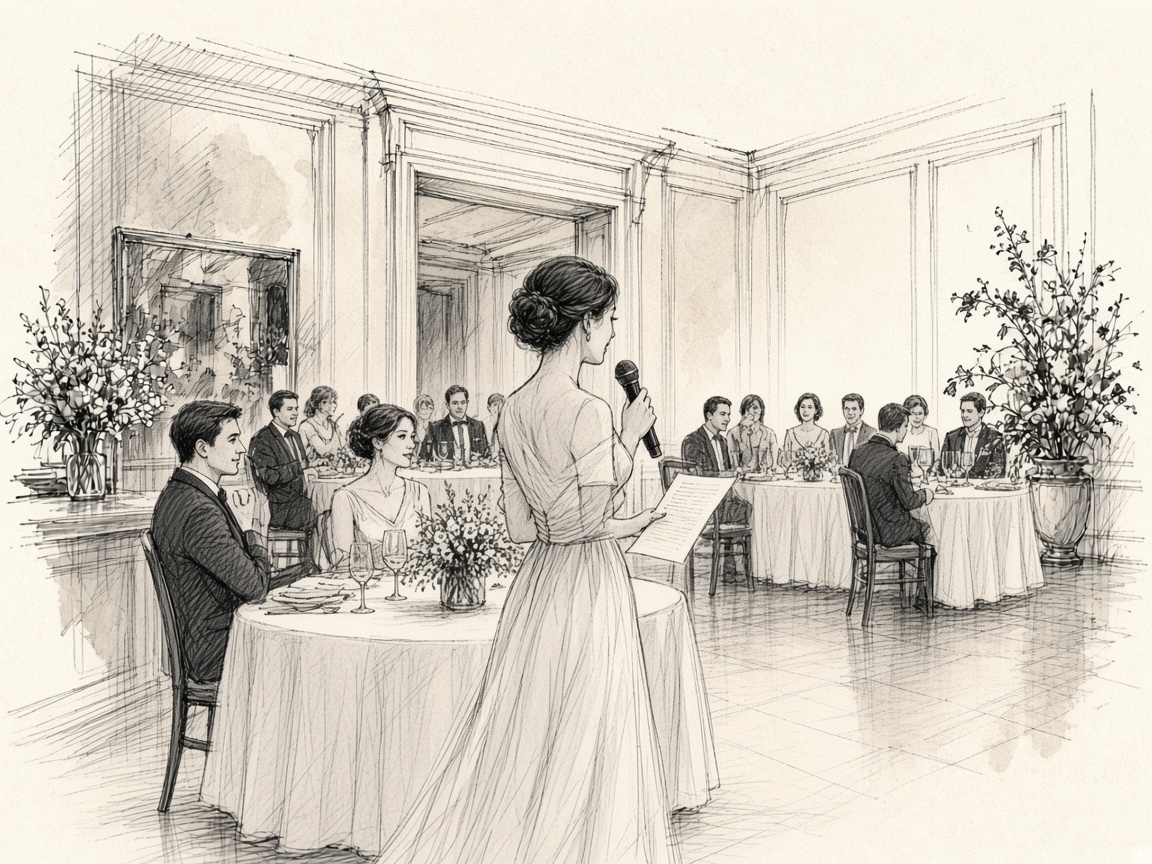
Most of the nerves live here, and that is normal. Public speaking scares almost everyone, and a wedding raises the stakes because you only get one shot in front of everyone who matters to the couple. Good news: the room cannot see your nerves nearly as well as you can feel them. Your hands may shake and your heart may pound, but from the tables, it mostly looks like someone who cares about getting this right.
There is research on exactly this. In a 2003 study, people gave short speeches and then guessed how nervous they looked.
The audience rated them as much calmer than the speakers thought they seemed. Telling speakers about this ahead of time even made their speeches better.
Savitsky & Gilovich, 2003, Journal of Experimental Social Psychology
And remember who is in the seats. Nobody at a wedding wants you to fail. They are rooting for you, and they are on your side before you say a word.
Practice out loud, standing up
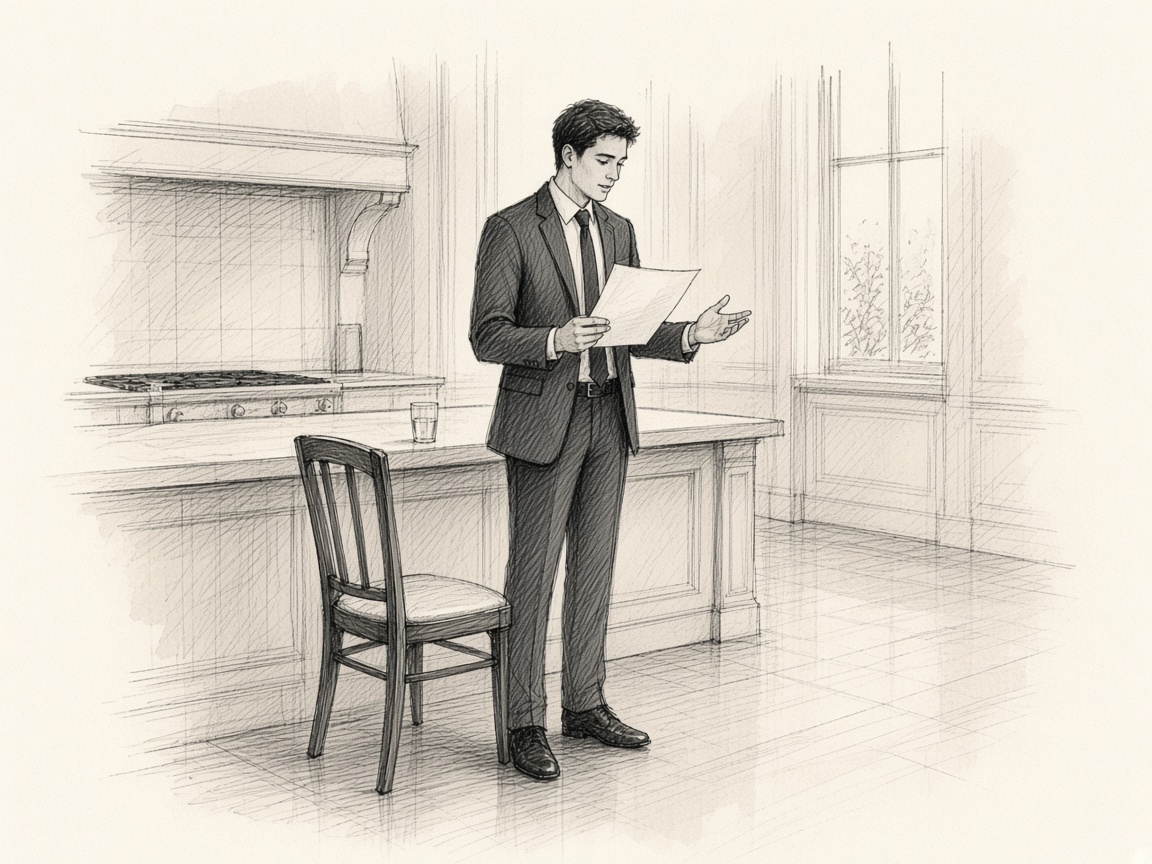
Your breathing sits differently when you are on your feet, and the toast has to survive that. Read it aloud standing up, twice, then read it to one person who will tell you the truth. If you can, read it to somebody who has never met the couple, because they will catch the line that only makes sense if you were there. Not to memorize it. To find the sentences you stumble over, which are usually the ones trying too hard.
Memorize the first line and the last line and leave the middle as an outline on the page. A toast memorized word for word turns into a panic at the first missing word, and a toast with only the opening and closing in your head can wander and still land.
Spend the emotion before the day
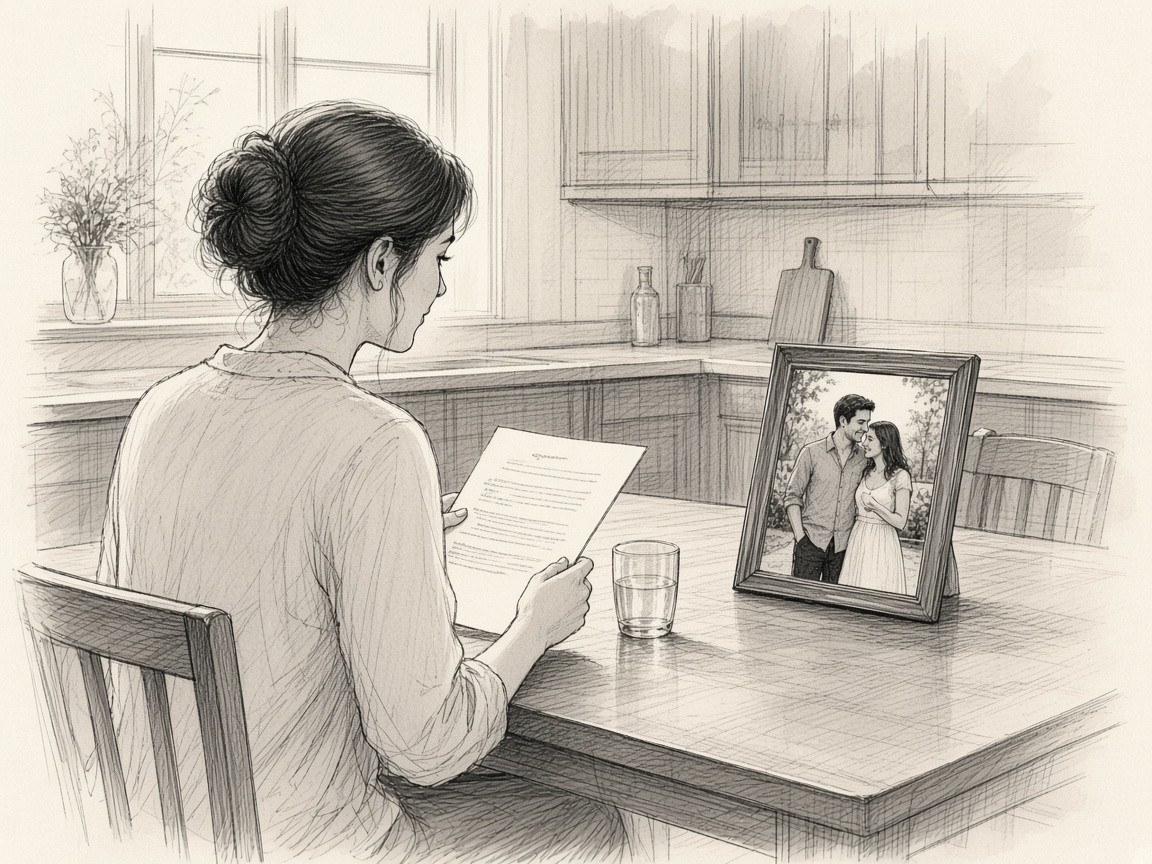
Being afraid of crying is the most common mistake here. A toast where someone's voice catches is usually the one people remember, and the catch is not a flaw in it. Nobody in that room is thinking less of you. They are watching someone they love talk about someone they love.
Still, you can spend most of that in rehearsal so there is less of it left on the day. When you practice the part that gets you, picture your bride or groom clearly, or hold up a photo of them and talk to it. Do that a few times and the feeling wears down. You have already cried about it, in your kitchen, and the day itself asks less of you.
If you are the kind of person who cannot stop once you start, there are a few things that work. Stop mid-sentence rather than pushing the last words through, because a squeaked-out word is what tips people over. Lower your eyes to the page for a moment. Breathe out slowly rather than gulping air. Swallow, or take a sip of water, which resets the muscles doing the catching. Then read the next line off the page in a lower, slower voice, and let your voice come back on its own over the following sentence.
The other one is worth knowing if you are prone to it. Eye contact is what sets you off, so look at their heads rather than their eyes. Hairline, forehead, the top of the head. From where you are standing it reads as eye contact, and it costs you nothing.
"Give me a second" is a full sentence, and it belongs in a toast. It tells the room you are still in charge of the pause.
Keep the page in your hand
Keep a copy even if you practiced, and keep a second copy on your phone in case the page disappears. One page, large type, held so you can look up without losing your place. If you are reading from a phone, put it in airplane mode and turn the brightness up, because a screen that dims in the middle of a toast is a hard thing to recover from.
Print it on something stiff if you can. A sheet of ordinary paper picks up every tremor in your hands and turns it into a visible flutter, and cardstock does not. If all you have is paper, hold it against the table edge or keep it in a folder while you are not reading from it.
Alarms off, ringer off. Eat something before you are called and keep your drink within reach.
The microphone will surprise you
The first time you hear yourself through a speaker, the voice is not the one in your head. It is often thinner, or deeper, or louder than you expect, and it is genuinely startling. Practice your opening line with pauses. It will help you acclimate to the delayed microphone effect before you move into the toast.
For example: "Hi [pause] my name is [pause] Stephanie [pause], and I am honored to be Sarah's maid of honor."
You do not need to do this for the whole toast. You will quickly get in a rhythm after the first sentence or two.
Hold a handheld microphone about one or two inches below your chin and speak across it rather than straight into it, which keeps your breath from thumping through the room. Keep that distance steady when you turn your head, and turn your whole body rather than just your face. A speaker who turns away from the mic goes quiet in the back half of the room, and the people back there stop listening.
Before your first sentence
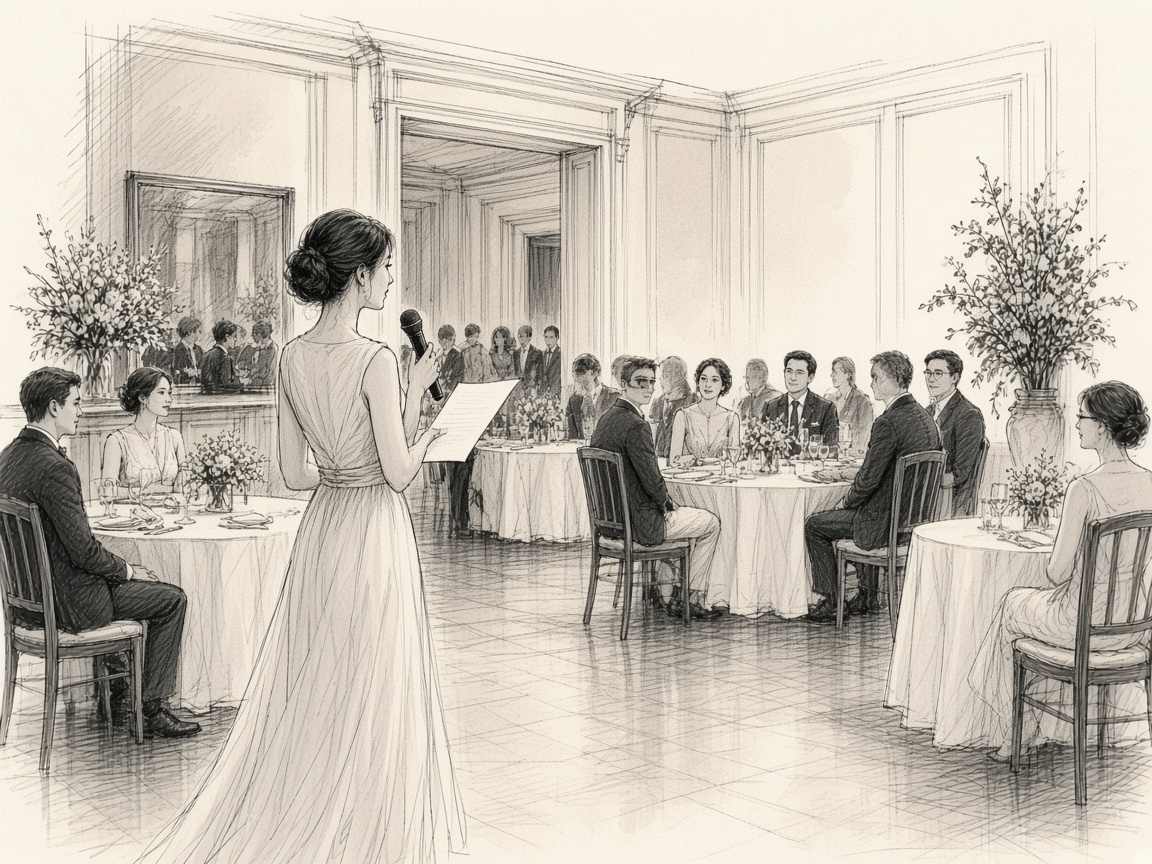
Wait for the room to settle. Starting while people are still clapping or still settling into their seats forces you to talk over them, and talking over a room sounds strained before you have said anything.
Skip "I'll keep this short." It invites the room to time you, and it tells them you think you are boring, which is a strange thing to teach an audience right before you begin.
When the room laughs
The laugh will come at a place you did not plan, and it will be at something you did not write as a joke. Stop and let it finish. Talking through a laugh is the single most common way a good moment gets thrown away, and it happens because the speaker is nervous and wants to keep moving. Wait for the room to come back down, then say your next line into the quiet.
How to end the toast
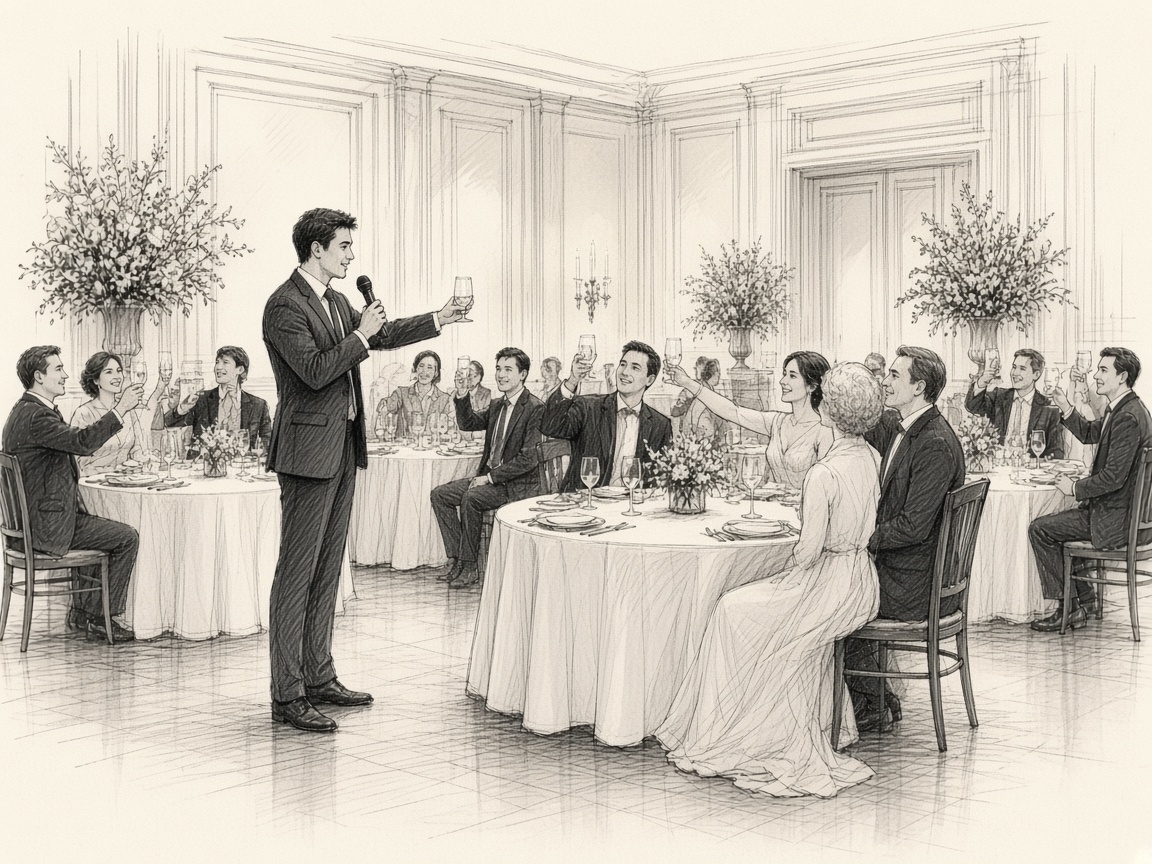
The last line is the toast itself, and it does one thing: it moves the room from watching you to looking at the couple.
Say it plainly. "Raise your glass with me to ___ and ___." Say both names clearly, as their names and not as a title or a joke.
Then stop. Do not add a second ending, a thank-you, or an apology for going long. Do not promise to keep it short after you have already been up there for four minutes. Simply raise your glass, take a sip, and hug the couple.
There is nothing left to do once the glasses are up. Hands come down, people drink, and the room turns back to the two of them, which is where it should have been all along.
Job Well Done
Then sit down and breathe. The part you have been dreading for weeks is over, and you will feel lighter right away. Your hands will stop shaking, your drink will taste better, and people will come up all night to tell you what your toast meant to them. Let them. You gave the couple something they will remember long after the cake and the music, and you did it in front of everyone who loves them. Now go enjoy the rest of the party. You have earned it.